
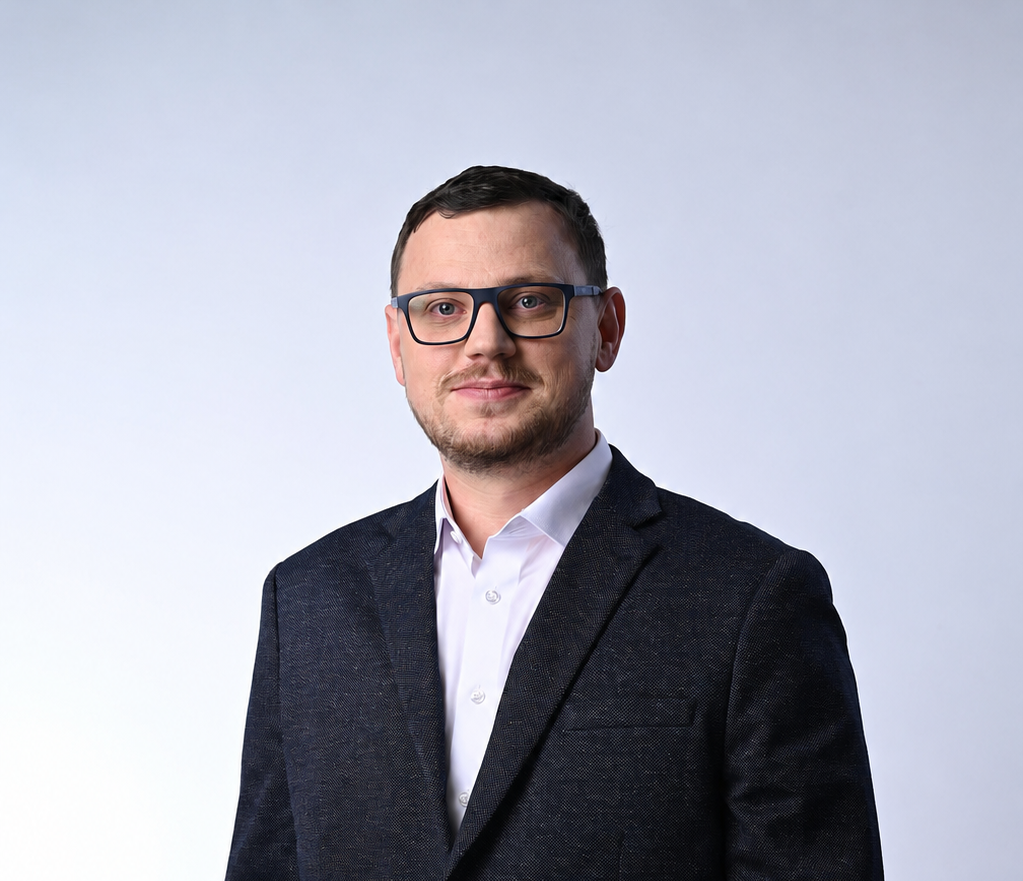
On 2 September at the Institute of Physics of the University of Tartu, Fermi Energia nuclear engineer Andrei Goronovski defended his doctoral thesis, in which he developed a methodology for better assessing the impact of naturally occurring radioactive substances and investigated their behaviour in industrial material flows.
Goronovski's doctoral thesis „Systematic study and NORM-LCA methodology development of NORM aspects in the bauxite residue valorization chain“ addresses naturally occurring radioactive materials, or NORM, and their consideration in life cycle assessment. One of the aims of the thesis was to supplement the widely used life cycle assessment, or LCA, methodology so that it is also possible to account for the radiological impact arising from natural radionuclides. The second part of the work focused on the reprocessing of bauxite residues and how radionuclides move during various chemical and metallurgical processes.
The results of the doctoral thesis showed that the multi-stage reprocessing of bauxite residue is feasible from a radiological perspective without significant accumulation of radionuclides and resulting significant health risks. At the same time, it became apparent that during processing, the decay chains of natural uranium and thorium can be disrupted and different isotopes can move into various process streams. Therefore, it is important to take the behaviour of radionuclides into account already when designing industrial processes.
The NORM-LCA methodology developed in the course of the work makes it possible to assess the impact of natural radionuclides on both humans and biota, and complements existing environmental impact assessment methods in an area that has been little addressed in conventional LCA models. The study also showed that the use of bauxite residues in, for example, construction materials increases the radiological impact only to a small extent compared to conventional materials, as natural radionuclides are already found in conventional building materials as well.
Andrei's doctoral thesis can be found here: https://dspace.ut.ee/items/2c7bff88-7645-456f-99f8-6e131616db78