
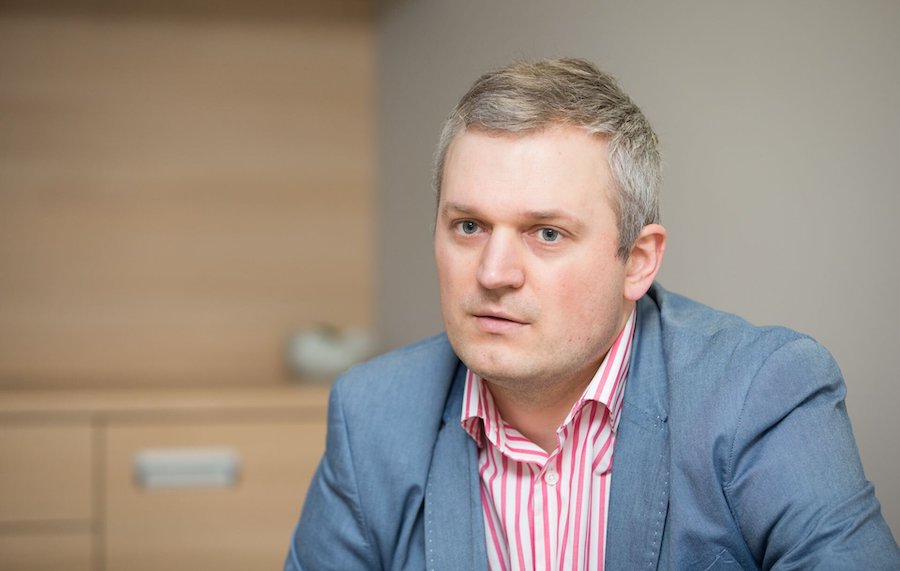
Modern nuclear power is a credible high-tech option to ensure carbon- and subsidy-free electricity generation for centuries to come, writes Kalev Kallemets, head of Fermi Energia OÜ.
This year will be the first year since 1959 that Estonia is an importer of electricity. We will join our neighbours Latvia and Lithuania, which had a deficit of 10 TWh last year, and Finland, which was twice as much in deficit. With the deficit comes rising prices, but unfortunately also growing uncertainty about the security of electricity supply.
Estonia has benefited greatly from more than 100 years of using oil shale in energy, and this is well described in the recent book "100 Years of Estonian Energy". However, this century will see the end of the oil shale era, just as the era of other fossil fuels is likely to come to an end in the coming decades. The European Union's 2050 target of reducing carbon dioxide emissions by 801 Ttpa3T cannot be met without phasing out all combustion for electricity generation and halving the burning of liquid fuels for transport.
Climate change is a reality due to heat waves, coral reef die-offs, permafrost and melting glaciers. The consequences are worsening and, unfortunately, CO2 in the atmosphere. In Europe, it is worth bearing in mind that we are one of the biggest importers of fossil fuels, and the main country to which Europeans' billions of euros go for coal, oil and gas is Russia. Replacing the burning of fossil fuels with clean energy is good for the environment and good for Europe's independence and economy.
Dogmatic renewable energy
Unfortunately, Europe's energy policy is dogmatic in its belief in renewable energy. It is a good thing that the error of being too blindly obsessed with biofuels has been acknowledged, because the consequence was the energy-wasting burning of rapeseed oil and cereals and the destruction of the rainforests of Asia for palm oil production.
Indeed, Germany and Denmark have been successful in increasing renewable energy capacity thanks to large production subsidies, but it is no coincidence that these two countries have the highest electricity prices for European consumers. It is also no coincidence that, to stabilise the volatile wind energy market, German companies are working with Gazprom to build the Nord Stream 2 pipeline, whose natural gas is an essential wind energy boon.
It is doubtful whether all member states are wealthy enough to subsidise production to the tune of billions of euros over decades. Individual wind projects are planned without subsidies, but the insurmountable problem with wind power is that the wind only blows with sufficient force to generate electricity efficiently 30% of the time, and because wind is highly variable, it does not guarantee security of supply. In 2018, the actual load factor for wind turbines in Estonia was 28%, with a variability of 90% of capacity per hour.
It is now clear that the target of 50% of electricity generation from renewable energy is not realistically achievable in Estonia, when the actual level in 2018 was 17.5%. Renewable energy certainly has a role to play in decarbonising energy, but in practice it means making a similar choice as Gerhard Schröder, Angela Merkel and Vladimir Putin made for Germany - massive imports of Russian gas to stabilise wind power. Would it really be peasant wisdom to disconnect Estonia from Russia's electricity system in order to create a new dependence on burning Russian gas?
Nuclear power is the main source of carbon-free electricity generation in Finland and Sweden. These countries made the right contributions in the 1970s. Finland is the only Western country to build two (!) new nuclear power plants with private capital without public subsidies. In particular, the latest investment decision on the Fennovoima project with a planned electricity price of €50/MWh for 2028-2088 gives the best market signal, taken at a cost of billions of euros, of what competitive unsubsidised energy is.
In Sweden, two of the oldest Ringhall reactors will be shut down by the end of next year, and in Germany, eight nuclear reactors will be shut down at the same time for internal political reasons. In the next few years, Denmark, Finland, Sweden and Germany will close coal-fired power plants, and Norway will build powerful transmission lines to the UK, which also faces electricity shortages and higher prices than NordPool.
Electricity from Sweden and Norway, which have so far covered the deficit in the Baltic States and Finland, will start to move westwards and southwards. In 2025, the Baltic countries will be desynchronised from the north-western Russian electricity system, which will end the 10 TWh of electricity imports from Latvia and Lithuania. At the same time, the role of electricity in energy, both for heating and transport, will increase rather than decrease.
These factors all mean that it is pretty certain that electricity prices will rise, as they have already done in 2018-2019. Unfortunately, especially after 2025, there may be situations, particularly during cold, windy high winters, when there is not enough electricity for all consumers. This is a risk for all businesses that want to fulfil their customers' orders on time, and for hotels that do not want to accommodate their customers in closed lifts.
New generation reactors
Based on extensive US test programmes from the 1960s, fourth-generation molten-salt reactors are currently being developed and offer several important solutions. One is low pressure, which provides significantly higher safety and at the same time lower investment costs than pressurised reactors. Secondly, the heat transfer medium is molten salt instead of water, which cannot cause steam or hydrogen explosions as in the case of a water reactor.
The target for the cost of production is €45/MWh and this is manageable, as molten salt can store a large amount of thermal energy and be channelled to a steam generator to produce electricity according to market demand. Small modular reactors with a capacity of less than 300 MW will be suitable for Estonia and construction permits will be sought in the US and Canada within the next five years.
There are certainly a lot of unanswered questions, but looking at the example of the Finns, if we are smart enough and can work together, modern nuclear power is a serious high-tech option to ensure carbon and subsidy-free electricity generation for centuries to come. By the end of this year, Fermi Energia, together with its seven research partners from Estonia, Finland and Belgium, will try to get answers to many questions from the feasibility study, which we will present publicly at the end of the year.
In the next ten years, shale power generation will be a thing of the past, and we have to accept that the wind does not blow all the time. Therefore, all options for energy security and energy transition in Estonia, including small modular reactors, will have to be seriously considered in the coming years. I would like to thank all the Estonian companies that support the development of nuclear energy in Estonia and understand that energy security is too serious an issue to believe the fog of wind energy and the security of supply that our deficit neighbours can provide.
First published in Äripäev on 28.05.2019, author Kalev Kallemets