
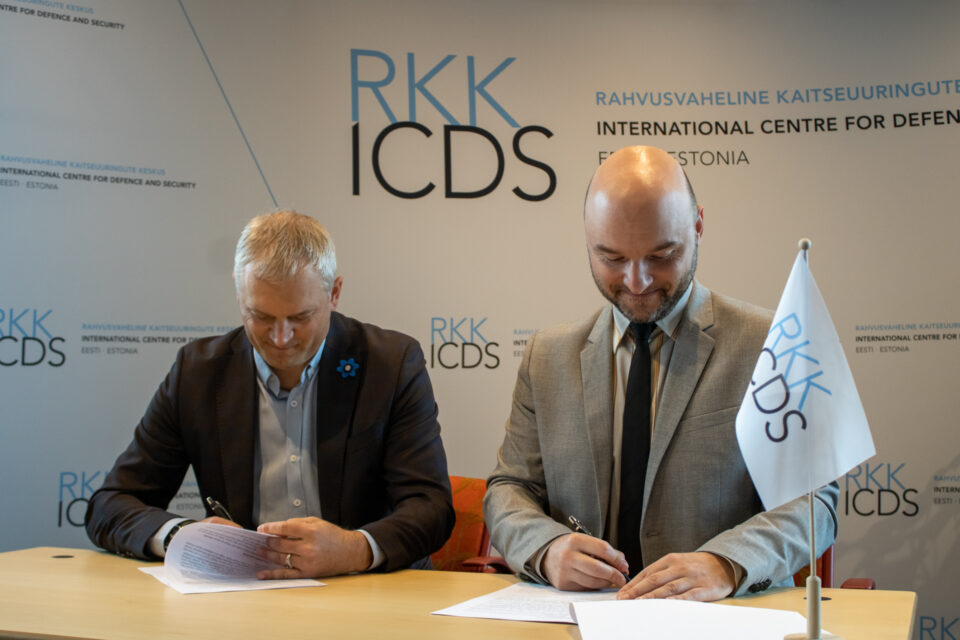
The International Centre for Defence Studies (ICDS), in cooperation with Femri Energy, is launching a study on the impact of the development of nuclear energy on Estonia's foreign and security policy and strategic partnerships between countries.
On the one hand, the study maps the risks to nuclear cooperation that may hamper the promotion of Estonia's foreign and security policy interests, including relations with the EU and regional cooperation, and the actions and measures to mitigate them. On the other hand, it examines how nuclear cooperation can benefit the strengthening of relations.
"Nuclear energy has many dimensions. One of them is certainly international relations and foreign policy, which is existentially important for my country - Estonia. So it needs to be studied seriously," said Kalev Kallemets, head of Fermi Energia.
"Cooperation in nuclear technology can foster not only private sector-technology interactions, but also national foreign and security policy ties," notes Tomas Jermalavičius, Chief Scientific Officer of the JRC. "This is particularly important for countries like Estonia, which are seeking to involve more allies in the Nordic-Baltic region, including the US, to counter geopolitical pressure from Russia and China."
In recent years, theRC has studied, among other things Kremlin's nuclear-powered hybrid projects in Europe, including the Astravjetsi nuclear power plant in Belarus; analysed. Impact of the 2018-2019 elections on energy security and climate policy in the Baltic States, Poland and Finland; made recommendations on Estonia's energy security and regional and local securing the future of the natural gas market; a critical look at the three Baltic States gas supply, including LNG supplies; and highlighted how the Baltic countries are. decoupling from the Russian electricity grid is not just an energy project., but also an important geopolitical step with significant political and security implications; etc.
Fermi Energia is exploring options to build a new generation nuclear power plant in Estonia, based on small modular reactors being licensed in Canada, the UK and the US. The cooperation with Fermi Energia will provide theRC with an overview of the latest developments in the nuclear sector and the data needed for a thorough impact analysis of strategic partnerships in Estonia.
Estonia's plans to meet its carbon reduction targets rely heavily on renewable energy for electricity generation. Driven by Europe's Green Deal and the goal of achieving climate neutrality by 2050, there are similar aspirations and trends across the Nordic-Baltic region. At the same time, electricity capacity shortages and high prices are a concern across the region. This concern is further exacerbated by the growing demand for electricity in overlying sectors such as transport.
One of the options being discussed in Estonia's future energy strategy is the introduction of nuclear power, small modular reactors, to ensure a stable baseload capacity and security of supply, not only in Estonia but in all three Baltic countries. To this end, the Estonian government has set up a working group to study the possibilities of introducing nuclear power, and an overview of the results of the working group's work will be presented in September 2022 at the latest.