
The Centre for Collaborative Research, set up by European politicians (Joint Research Centre - JRC) has assessed the impact of the full nuclear power cycle on both climate and the environment, with a particular focus on nuclear waste.
The JRC concludes in its report that nuclear energy production meets all the criteria - it does no more harm to human health or the environment than any other sustainable energy production technology.
The aim of the study was to find out whether nuclear energy meets the criteria of the European Union's energy taxonomy, DNSH, i.e. whether it does not cause "particular harm". On the basis of meeting this criterion, renewable energy projects, for example, can benefit from EU financial instruments such as subsidies and loans.
The results of the JRC study are presented in a report "Technical assessment of nuclear energy with respect to the 'do no significant harm' criteria of Regulation (EU) 2020/852 ('Taxonomy Regulation')", i.e. the founding document for the classification of financing for sustainable energy. This document is the basis for deciding, when investment is requested, what is "green" and what is "polluting".
In addition to supporting climate objectives, the environmental, economic and health impacts of different energy sources were assessed.
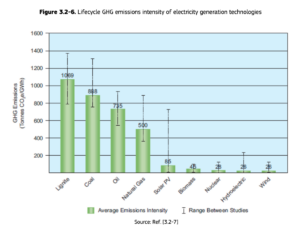
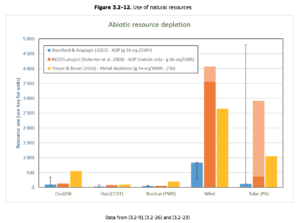
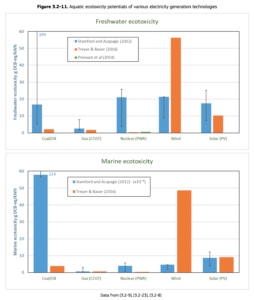
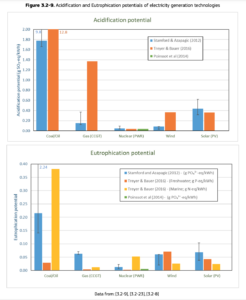
"The study did not identify any credible scientific evidence that nuclear energy harms human health or the environment more than other listed green energy sources. A comparison of the harms to the environment and human health of different energy technologies (oil, gas, renewables and nuclear) shows that the non-radiological impact of nuclear energy is comparable to that of hydro and renewables," the report says.
Until now, nuclear energy has not been part of the EU taxonomy, but its inclusion has not been ruled out, as the previous TEG (Technical expert group on sustainable finance) advised that the assessment of nuclear energy should be carried out by experts with a thorough knowledge of the full nuclear production cycle. The main issues for the new expert group concerned the management of radioactive materials and final disposal.
The JRC report draws attention to the fact that now "There is a consensus in the scientific and engineering community at large that the disposal of long-lived high-level radioactive waste in deep geological repositories is, within the current scientific framework, the most convenient and safest method of separating waste from the biosphere for a very long time.".
In 2020, the European Commission launched a thorough study to find out whether or not nuclear power should be added to the EU's environmental taxonomy. First of all, the Centre for Collaborative Research produced a report which determined that nuclear energy fit the criterion of "not particularly harmful". This report is now the main source used to further assess the European Commission's policy - two other independent expert groups, the Expert Group on Radiation Protection and Waste Management and the Scientific Commission on Health, Environment and Health Effects, will work on the report before taking a decision. The expert groups will submit their reports to the European Commission within three months.
READ MORE: World Nuclear News, Reuters, Euractiv, World Nuclear Association, Foratom