
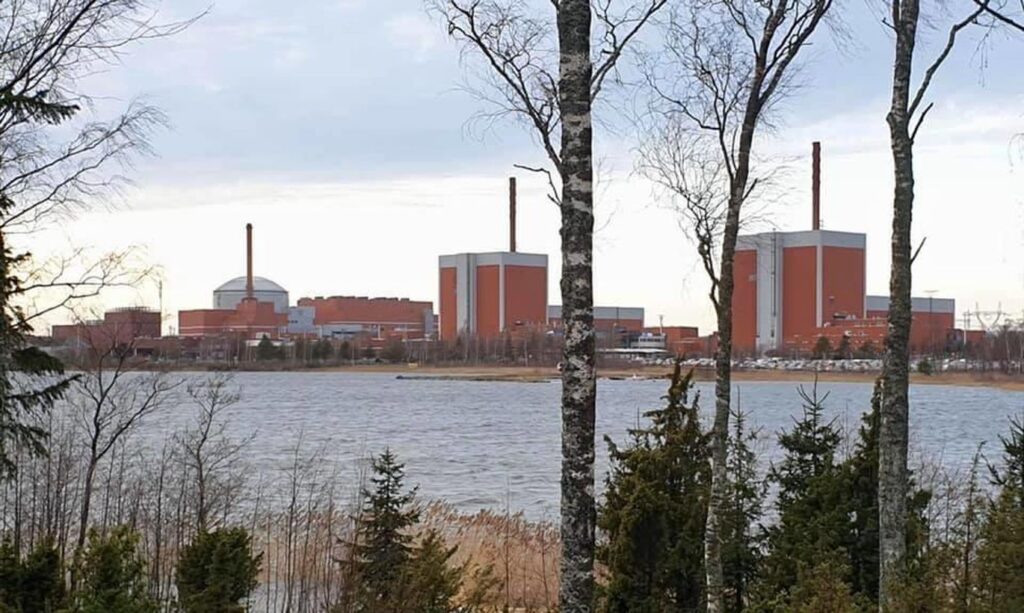
Led by the generators of Estonia's first nuclear power plant, the men of Fermi Energia OÜ, the Western Europeans visited their neighbours in Finland last week. visit the plant. Questions were answered and fears were allayed.
Peep Vassiljev, the chairman of Rakvere Municipal Council, visited Chornobyl last summer and has a book in progress about the horrors there. The emotions there were very vivid in his mind. And when he heard that a nuclear power plant could be built in Kunda, he was sceptical.
"Today I am less," said Vassiliev. This is due to a visit he made last week. Together with Peep Vassiliev, Rakvere city councillor Allan Jaakus and two men from Fermi Energia, he visited the a dozen people connected with the municipality of Viru-Nigula. Many of them said that their own eye is king.
They wanted to return home knowing how the plant there was designed and built. is a third-generation modular fast nuclear power plant with a capacity of 1600 megawatts. The nuclear power plant was not accessed, but access was gained to the nuclear waste disposal site in use.
At the visitor centre, our men were shown how nuclear power is produced and how nuclear waste is stored. The municipality of Eurajoki has a population of about 9500 inhabitants and s a new nuclear waste repository is under construction at Onkalo 500 metres underground in granite.
Allar Aron, a member of the Viru-Nigula Municipal Council, said that as someone who had studied energy, he was surprised by the difference in capacity between modern and old stations. "At the end of the Soviet era, the capacity of Estonia's two largest oil shale thermal power plants was the same as it is now. l after the start-up of the third reactor. The plant is much smaller in size," said Aron.
The plant has three reactors, two of which are operational and one under construction. "In operation 1 and 2 are both 890 megawatts and were completed in 1978 and 1980 respectively. The third reactor 3 is under construction and will produce 1600 megawatts, the same as the two existing ones," Aron said.
The councillor said that the main message that everyone underlined was that safety was the most important thing. "Nuclear power plants have been producing electricity in Finland for over 40 years. In that time, there has not been a single truly dangerous situation. This is the main reason why 71 per cent of the population supports an increase in the share of nuclear power, as public surveys show," said Aron.