- The technology of the small nuclear power plant planned for Estonia is manageable.
- Managed generation capacity within Estonia will ensure security of supply and maintain grid frequency.
- Estonia needs at least 1,000 MW of managed electricity generation capacity.
The capacity of a small reactor planned for Estonia can be controlled
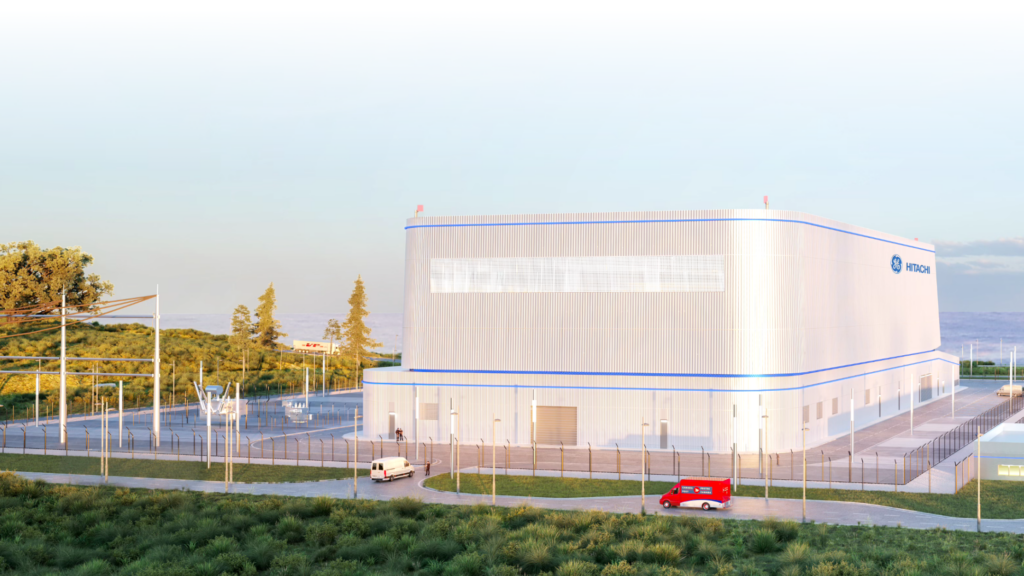
BWRX-300 small reactor nuclear power plant.
A balance between generation and absorption must be ensured in the electricity network to maintain the network frequency. Although nuclear plants are not the fastest to regulate generation, they are usually the leading generation and ensure network stability even in the face of fluctuating consumption. The BWRX-300 small reactor planned for Estonia will be able to regulate its capacity according to intraday consumption if there is a reason to do so.
| 50-100% | on a daily basis |
| 0,5% | per minute |
Source: aris.iaea.org
Did you know that...
In the energy sector, generation sources are broadly divided into two categories:
- Energy sources that depend on the weather and are not under control, and need to be complemented with controlled production and storage capacity. For example, the sun and the wind, one of which does not shine and the other does not blow in line with the consumption patterns of the Estonian people.
- Energy sources that are controllable and meet our needs during dark and windy periods and keep electricity online. For example, fossil fuels, biomass combustion and the nuclear energy. Estonia's electricity supply regulation policy sets the country's required controllable electricity capacity at 1000 MW.
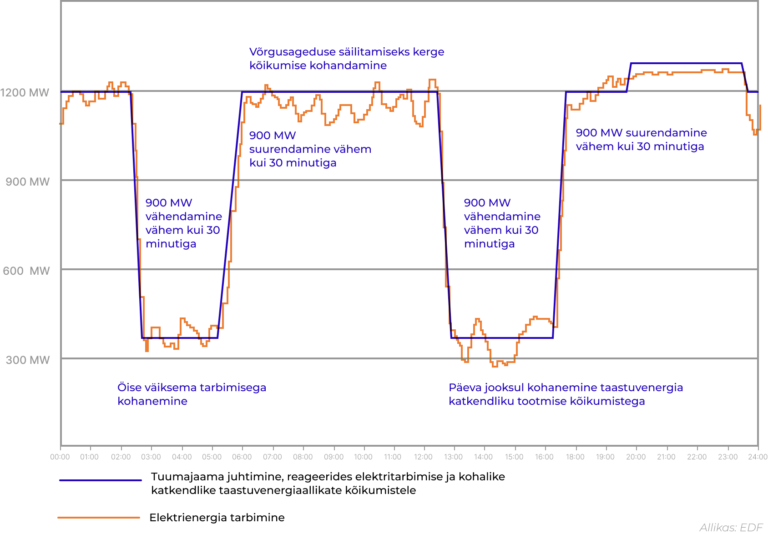
France even manages the output of its large nuclear power plants on a daily basis according to consumption.
The French control the power output of their nuclear plants according to their consumption.
EDF, the French energy company, is responsible for all the nuclear power plants in France, and has been making its reactors more flexible over the past 30 years, with the aim of making them better able to adapt to load fluctuations and to work with renewables.
French nuclear power plants need to be resilient as they provide a large part (75%) of the electricity produced in France.
EDF's experience shows that, apart from some minor impacts on the secondary system (water and steam cycle), flexibility does not have a major impact on operation and nuclear safety.
Source: edf.hal.science
Experts say: